

Innovating Finance Education:
Anticipating and driving What comes Next
Anticipating and driving What comes Next
“The financial field is being reshaped on multiple fronts,” said Gayané Hovakimian, Ph.D., professor and area chair of Finance and Business Economics, the Gabelli School’s largest academic area, which offers an undergraduate major, undergraduate and M.B.A. concentrations, and two specialized master’s programs. “Obviously, technology is a driving factor in the changes we see, but then there are market structure changes, investment preferences, and regulations and policy. Not only do we have multiple fronts that are evolving, but the pace of change is so much faster than anything we have seen before. This creates new requirements and new challenges for finance students, but also new opportunities. To succeed, they need to be agile, analytical, and ethically grounded.”
Building Technical Skills for the Future of Finance

Addressing the Evolution of AI
“Artificial intelligence and machine learning models are no longer used for just crunching numbers,” she asserted. “They are used for real decision-making.”
AI also is proving useful to the financial industry in another, perhaps even more surprising way, noted Associate Professor Lin Tong, Ph.D., who teaches financial modeling for undergraduates and fund trading strategies for graduate students. It is being leveraged to convert what might be called analog data into numbers. Before the rise of AI, institutional investment firms might have sent analysts into the field to check on a business’s performance: Does a hotel chain’s reported occupancy rate square with how many lights are on in one of its hotel’s windows at night? Do the number of cars in a big-box store lot support the company’s sales projections? Now, however, much of that on-the-ground intelligence can be gleaned from commercially available satellite images. Machine learning programs can quickly analyze those images and provide a numeric count. They also can rapidly scan breaking news reports about companies for positive or negative words to determine whether the news is good or bad.
“AI can really help to convert nontraditional data into numerical data,” said Tong, whose research interests include AI applications in high-frequency trading and asset management. “You can efficiently convert that nonnumerical data into some tradable information very fast, into something that asset managers can directly input into their models.”
Tong added that as the use of AI increases and is adopted for new applications, the Gabelli School’s Finance and Business Economics Area has responded by offering courses that cover nearly every aspect of AI applications in finance, ranging from Fintech and Machine Learning in Finance to Algorithmic and Automated Trading Systems.
Developing Finance Electives for Tomorrow’s Workforce
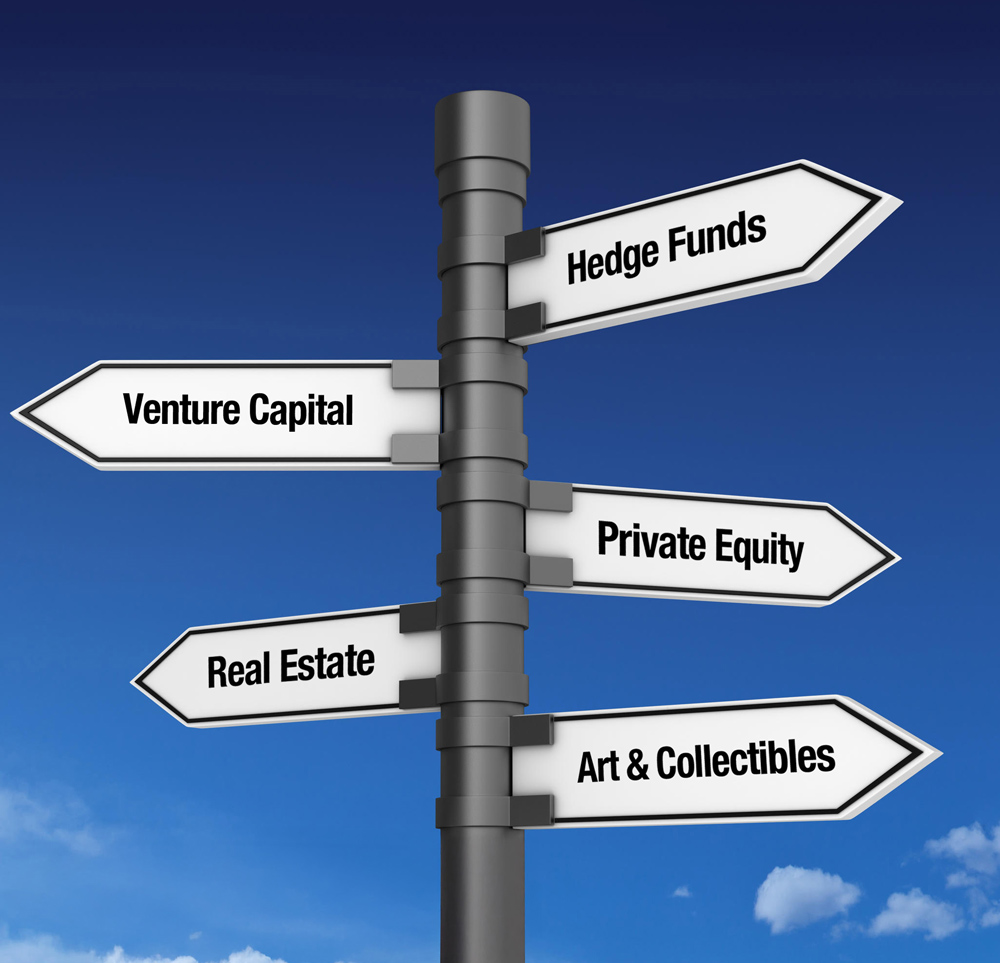
One of the more recent additions to the finance portfolio is an undergraduate concentration in alternative investments. The five courses it comprises reflect how the landscape of investments available to all investors has shifted in recent years to include not just traditional, publicly traded stocks and bonds, but also a diverse range of alternative investments, including hedge funds, private equity, venture capital, and real estate as well as exotic alternative investments such as art and collectables. Graduate courses on alternative investments, commodities, and venture capital also are being offered. The Gabelli School is one of the few comprehensive undergraduate programs that offer alternative investment course content in the United States, according to Clinical Professor Kevin Mirabile, who directs the concentration.
“This is part of the Gabelli School architecture that emphasizes applied learning,” he said. “I think one of the things that differentiates us is that we have all of these similar but equally important concentrations, which students can choose from.”
Embracing Alternative Investments: From Boutique to Mainstream
“In the last five years, we’ve seen an expansion of products that use alternative investment strategies that are available to retail investors,” he explained. “What were once considered boutique or specialty investments have now really gone mainstream.”
As the alternative investment market has grown, so has the number of people working in it—including Gabelli School alumni. Mirabile actively taps alumni and other industry experts to teach classes as adjuncts or to serve as guest lecturers.
“I believe the best person to talk about what’s happening in the industry is someone who works in the industry,” Mirabile said. “I provide the academic framework to understand and evaluate what’s happening, but I bring in practitioners to tell us about what they’re doing day-to-day.”
In addition, the alternative investment concentration has close ties to the student-run alternative investment club, which is open to all Gabelli School students and typically has 100 to 200 members. Students meet to learn about the various types of alternative investments, hear presentations by industry experts, and even visit hedge funds; private equity; and other alternative finance firms in New York City. All of these opportunities provide a solid foundation for pursuing careers across a variety of finance-related fields.
“Students have had a lot of success in finding jobs in wealth management, asset management, and in alternative-investment firms themselves. And historically, that was not an area where we had placed as many students as we do today,” Mirabile asserted.

Conducting Research to Remain at the Cutting Edge
“There is an argument that traditional intermediaries have too much market power,” Mueller stated. “This is a highly regulated environment with many barriers to entry. With enough market power, a big bank can push loan rates above where they’d land in a truly competitive market.”
Open-source platforms such as Ethereum that are compatible with smart contracts—self-executing programs on the blockchain that automatically enforce the terms of an agreement—have resulted in decentralized finance (DeFi) applications, creating a financial system in which lending and trading can be done without relying on traditional intermediaries such as banks.
“Blockchain and DeFi allow for trustless execution of transactions,” Mueller contended. “In traditional markets, you need to trust an intermediary. The Securities and Exchange Commission spends billions of dollars to create and enforce its rules. Intermediaries spend billions of dollars to comply with those rules. Yet intermediaries still sometimes collapse, failing to live up to our expectations of trust. An argument for blockchain, then, is that we pay too much for trust in traditional markets. The blockchain mitigates the need for that regulation to a certain extent by facilitating trustless execution.”