

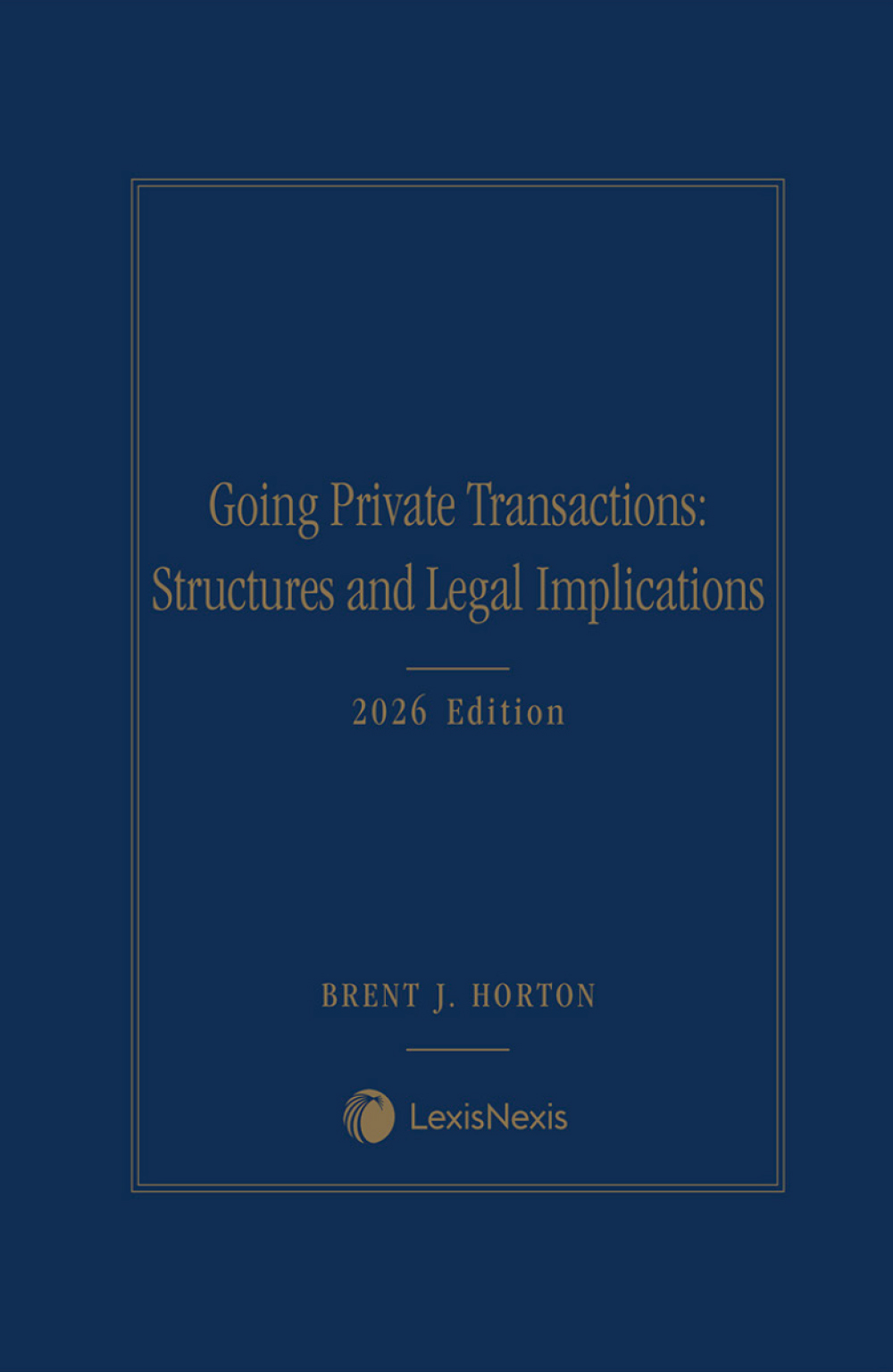

Going Private Transactions:
Structures and Legal Implications
A going private transaction is when the publicly held shares of a company are acquired by a controlling shareholder, management, or a private equity firm, and the company is delisted from stock exchanges and terminates its registration with the SEC. In this case, the former publicly held company decided that there would be some advantages to private ownership, perhaps in the case of a struggling organization to make operational changes without glaring public scrutiny, or to free a company from the costs of periodic public reporting. Many well-known businesses have gone private in recent years, including Continental Resources, Inc. in 2022 and Nordstrom, Inc. in 2025.
“If you’re a publicly traded company, you’ve got a lot of pressures on you from investors to meet earnings estimates,” explained author Brent J. Horton, JD, associate professor and area chair of Law and Ethics at the Gabelli School. “It puts a lot of constraints on various directions that you can take the company, different innovations that you can implement.
So a lot of companies, especially if they want to go in a direction that may cause shareholder pushback, go private so that they don’t have to worry about that.” That was the case with Dell Computers, which is one of several case studies included in the book.
In addition to covering the nuts and bolts of the complex going private structures—which are generally governed by state corporation law—Going Private Transactions: Structures and Legal Implications explores federal securities laws and SEC rules affecting these deals. It also delves into the types of litigation that can arise as a result.
“With going private transactions, there is serious litigation risk,” Horton commented. “In fact, I think it’s very difficult to go private without getting sued by someone, often a cashed-out shareholder who believes they were undercompensated for their shares. The book is a great source for attorneys who are advising their clients on the pros and cons of going private.”
Horton’s debut title is a culmination of his prior research on Delaware fiduciary duties and going private transactions, a comprehensive source for practitioners and scholars alike. In addition to hard copies, its contents are accessible on LexisNexis.