


Gabelli School And FCRH Students At Fordham London Serve On Earthshot Prize Nomination Team
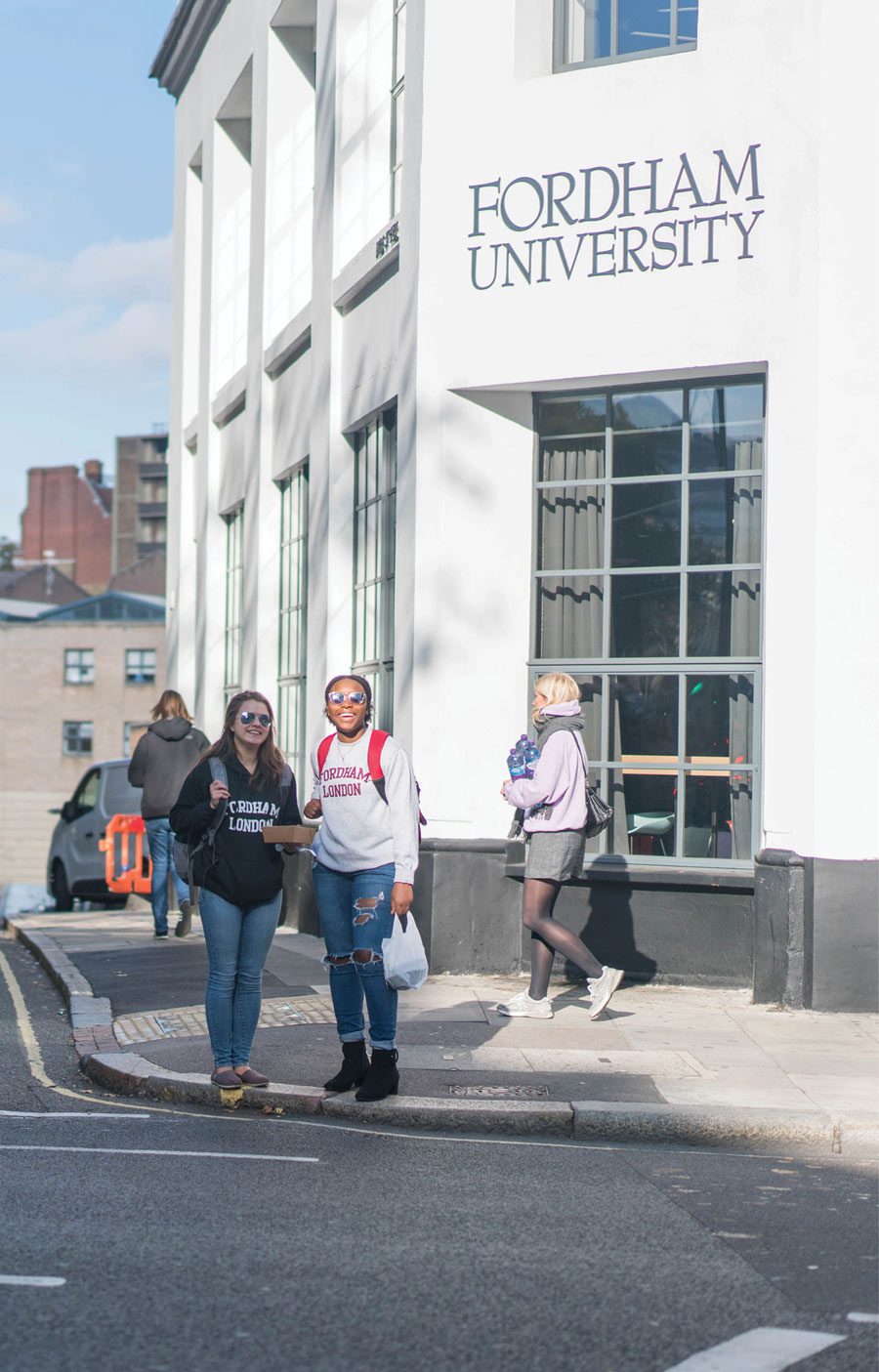
Fordham London earned a place as an official Earthshot nominating organization in 2024, joining an international network that includes NGOs, investment companies, foundations, and research institutions. Through this affiliation, Fordham students are directly involved in a high-profile process, identifying and presenting nominees for consideration.
“The Earthshot Prize takes global issues and looks at them from a solutions perspective. It’s an incredible opportunity for our students to be part of that impactful work,” said Matthew Holland, senior director of Fordham London. “It is a great way of centering their experience on shared global issues while giving them a local context of how the UK is responding to these challenges.”
Ergem Senyuva Tohumcu, the head of experiential learning and a faculty member in sustainability marketing at Fordham London, likened the process to screening startups. “Students are looking for unique solutions that tick all the boxes from impact to scalability to community engagement,” she said. “They are really searching for how we connect these big societal problems with a business strategy.”
It’s a goal that resonates with Sophia Puccini, a senior at the Gabelli School majoring in business administration with concentrations in social innovation and marketing, who hopes to build a career in sustainability. She feels that the skills she developed as part of the Earthshot nomination team were an asset during her internship at the Entrepreneurs Roundtable Accelerator. “It also made me aware of the kind of difference my work can make in developing a more sustainable world,” Puccini said.
Olivia Sobczyk, a junior majoring in finance at the Gabelli School, also was drawn to the Earthshot Prize by an interest in sustainable business. Sobczyk nominated a neobank, Green-Got, which reinvests all their clients’ funds into green businesses. “I thought they created such an easy way for people to be climate friendly in their everyday lives,” she said. “It was inspiring to me, because financial services aren’t typically forerunners in sustainability.”
While the nomination process is a natural fit for business majors, students from other disciplines also can benefit. Paolo Liaci, an English major with a concentration in creative writing and a minor in journalism, said, “This experience strengthened my ability to evaluate ideas not just on creativity, but on impact, scalability, and long-term viability.”
Students learn about emerging trends via global conference calls with other nominators. “The calls give them a sneak preview of what is to come in the next 10 to 20 years, because they are hearing from people who are at the forefront of this,” Tohumcu said.
Puccini sees reason for optimism. “New innovations are being developed daily,” she noted. “It is reassuring to see companies defying the odds and creating positive change.”